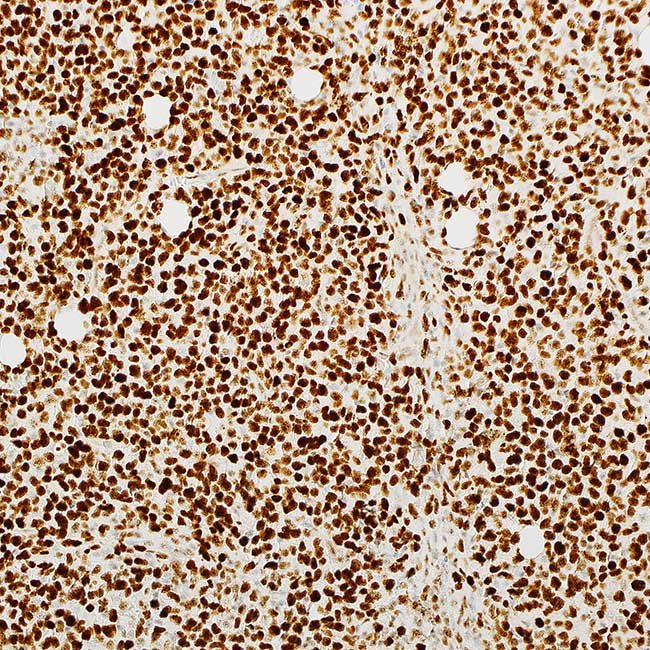
Diffuse large B-cell lymphoma (DLBCL) is likely to be a group of distinct clinicopathologic entities that are hard to distinguish with conventional methods.1,2 The germinal center B-cell-like (GCB), activated B-cell-like (ABC), and unclassified DLBCL are the subtypes into which DLBCL may be divided.2-4 The pathogenic processes of the ABC and GCB subtypes differ, which will have an impact on the creation of targeted medicines.3 Although gene expression profiling (GEP) is a powerful method for subclassifying DLBCL, it cannot be utilized in routine clinical practice because it necessitates a significant amount of time, technological proficiency, and limited resources. As a result, formalin-fixed, paraffin-embedded tissues should be immunohistochemically (IHC) stained in order to facilitate the translational use of the GEP categorization into protein expression by tumor cells. To translate the strong data from molecular investigations into a regular clinical platform, several methods employing immunophenotypic algorithms with modest panels of antibody biomarkers have been created using antibodies against CD10, BCL6, MUM1/IRF4, GCET1, FoxP1, LMO2, and BCL2. Thus, a high cutoff (at least 80%) for FoxP1 is necessary to attain great specificity for the ABC subtype, making FoxP1 helpful in the subclassification of DLBCL.