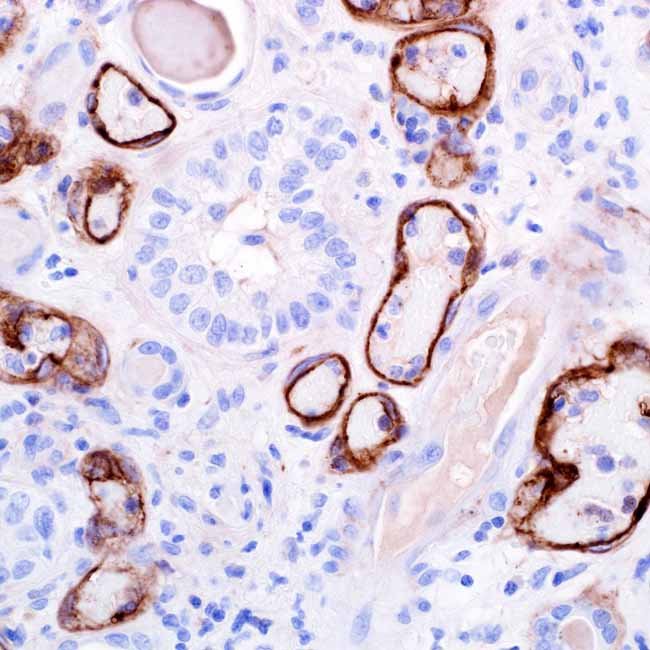
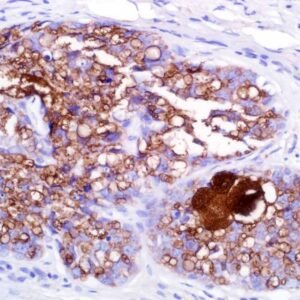
Acute humoral rejection occurs because antibodies react against the donor‘s endothelial cells, triggering the standard complement activation sequence. The activation process results in several split components from complement proteins. A fragment of C4 complement, known as C4d, is created upon activation of the typical complement pathway when an antigen antibody complex forms. C4d accumulation within peritubular capillaries is viewed as a secondary indication of an antibody-driven reaction. The presence of C4d can be a valuable indicator of acute renal allograft rejection.