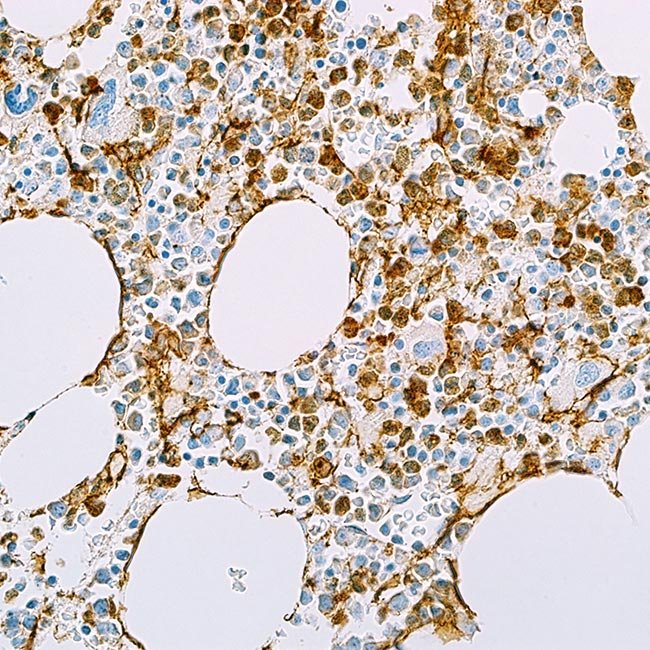
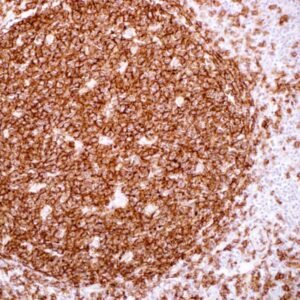
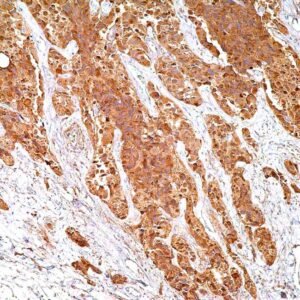
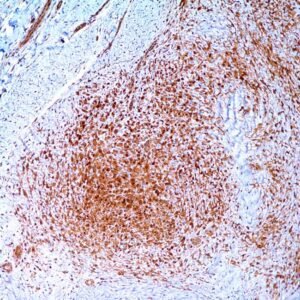
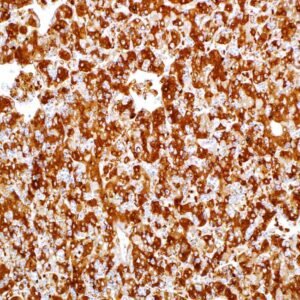
CD13, also referred to as aminopeptidase-N, represents a protease that crosses cell membranes and can be found across a variety of tissues and cell varieties, such as endothelial cells, epithelial cells, fibroblasts, and leukocytes. This protein, CD13, appears in numerous cancerous solid tumors and blood-related conditions affecting humans, proving helpful during the recognition of acute myeloid leukemia, particularly when utilized alongside a group of antibodies, namely CD13(+), CD34(+), CD117(+), CD16(-), and CD33(+). Myeloid sarcoma also expresses this specific protein, and anti-CD13 antibodies can greatly help with its recognition when included within a set of markers. Moreover, findings indicate that CD13 surfaces in both healthy and cancerous liver tissues, displaying a canalicular distribution pattern comparable to those noticed with polyclonal CEA and CD10. Consequently, anti-CD13 can serve as an extra valuable marker for telling apart HCC from neoplasms not originating from liver cells.