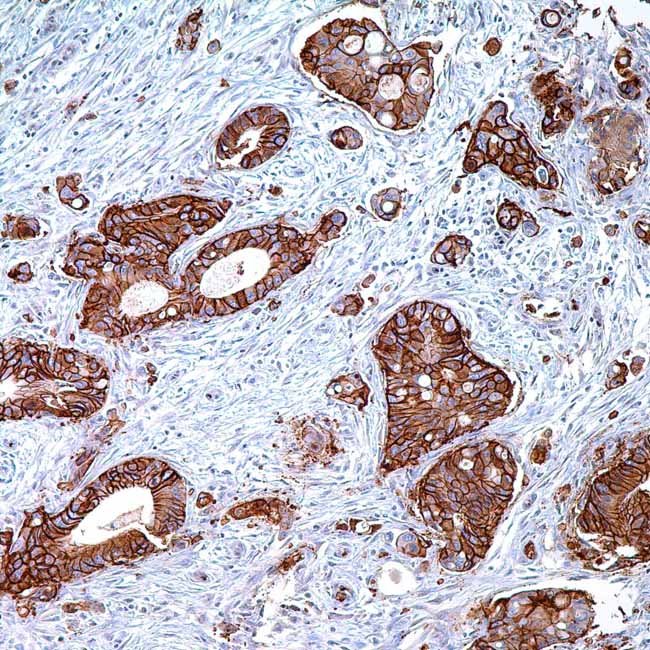
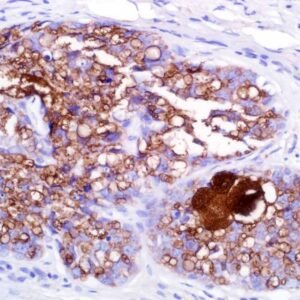
Glucose transporter type I (GLUT1), which serves as a prototype within the GLUT superfamily, functions as a membrane-bound protein that facilitates glucose transport in red blood cells. It plays a crucial role in transporting glucose across the mammalian blood-brain barrier and is also involved in glucose movement within the endothelial cells found in blood vessels, fat tissue, and heart muscle. GLUT1 can be found in numerous human tissues, including the colon, lungs, stomach, and breast. This transporter is often found at elevated levels in cancerous cells and in various tumors such as colon carcinoma and mesothelioma. The use of immunohistochemistry has revealed that GLUT1 is not present in reactive mesothelium but can be detected in malignant mesothelioma. Additionally, anti-GLUT1 antibodies have proven to be helpful for differentiating between benign endometrial hyperplasia and atypical endometrial hyperplasia along with adenocarcinoma.