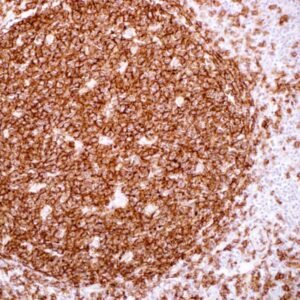
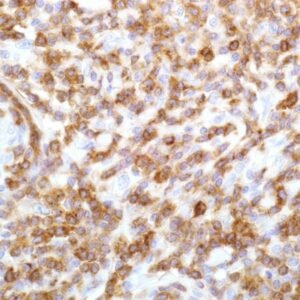
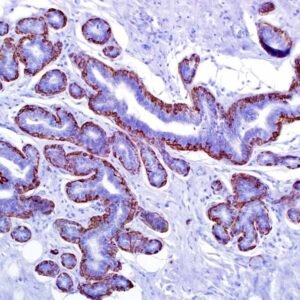
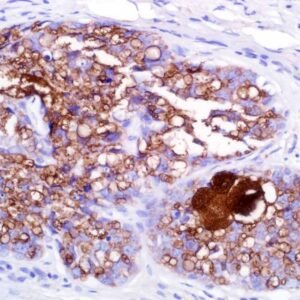
The antibody responds to the antigen unique to HSV type1. It can be used to identify HSV in infected tissue culturesearly on also to detect HSV in human cellular material takenfrom superficial lesions or biopsies. The herpes simplexvirus (HSV), which produces an infectious condition, isoften referred to as cold sore, fever blister, or night fever.Herpes Simplex Virus (HSV) comes in two primary varieties:1 and 2. The orafacial organs are typically where the HSV-1strain is found. The sacral ganglion near the base of thespine is where HSV2 typically dwells. With a large double-stranded DNA genome and an icosahedral nucleo-capsidencased in a lipid bilayer envelope, the virion of all herpesviruses is morphologically identical.