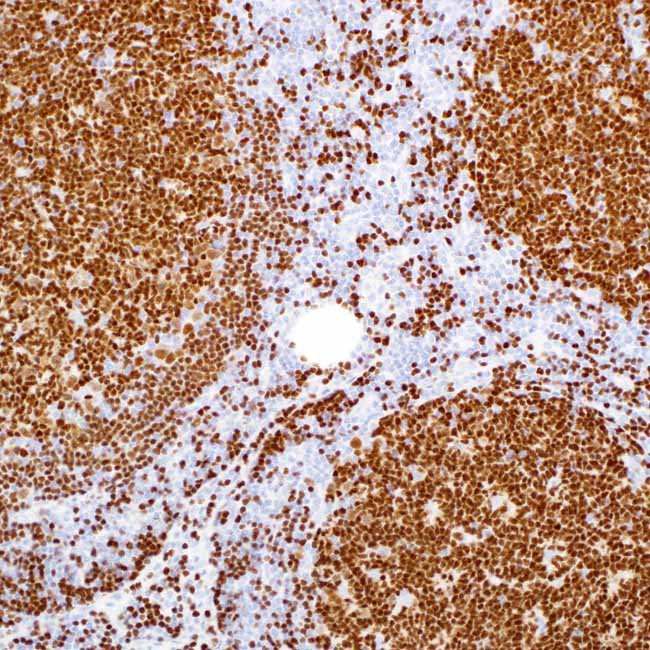
PAX-5 is responsible for producing a protein known as B-cell-specific activator protein (BSAP), which serves as a marker for B-cells, including B-lymphoblastic neoplasms and their development stages. This marker is present in nearly all instances of both mature and precursor B-cell non-Hodgkin lymphomas and leukemias. Around 97% of classic Hodgkin lymphoma cases show PAX-5 expression in Reed-Sternberg cells. PAX-5 is absent in multiple myeloma and solitary plasmacytoma, which aids in their differentiation. Diffuse large B-cell lymphomas do show PAX-5, except for those that have reached the final B-cell differentiation stage. T-cell neoplasms do not react with anti-PAX-5 staining. There is a strong link between PAX-5 and CD20 expression.