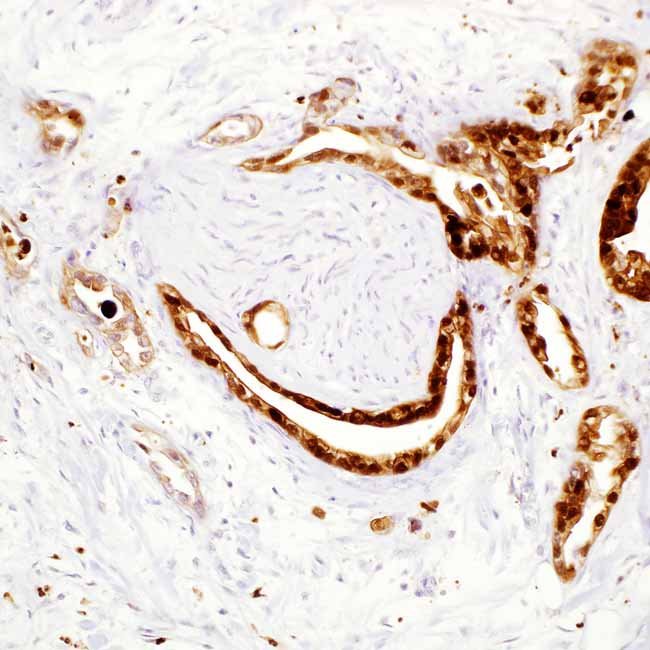
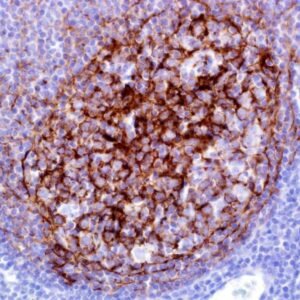
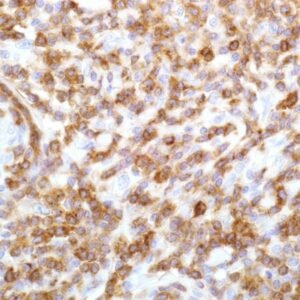
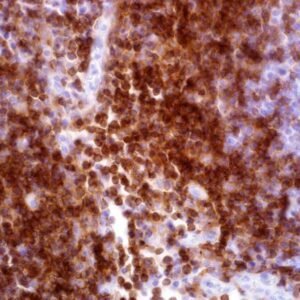
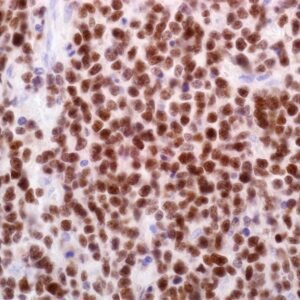
S100P belongs to the S100 protein family. This family is found in various cell types and is believed to be involved in the processes of cell cycle progression and differentiation. The presence of anti-S100P with nuclear or nuclear/cytoplasmic immunoreactivity is observed in pancreatic ductal adenocarcinomas, whereas it is infrequently found in benign pancreatic ducts. Additionally, it may assist in differentiating urothelial carcinomas from other genitourinary neoplasms, including prostate carcinoma.