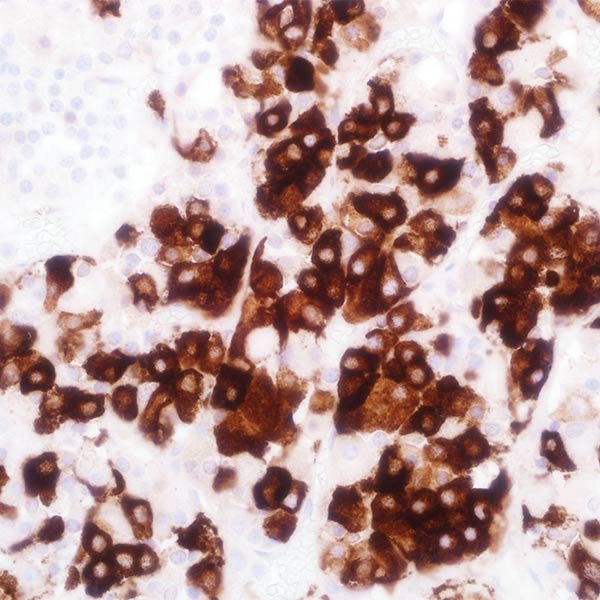
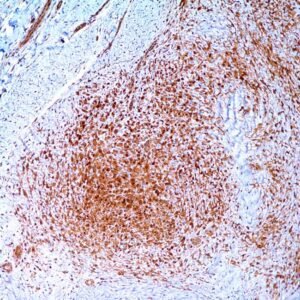
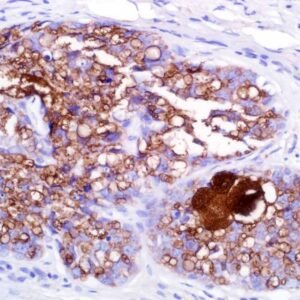
Thyroid-stimulating hormone, commonly called TSH or thyrotropin, is a peptide hormone that is produced and released by thyrotrope cells located in the anterior pituitary gland. It plays a role in controlling the endocrine activities of the thyroid gland. TSH is classified as a glycoprotein and is made up of two subunits, known as the alpha and beta subunits, which are linked to each other without forming covalent bonds. The alpha subunit of TSH can also be found in two other pituitary glycoprotein hormones: Follicle stimulating hormone and luteinizing hormone, as well as in the placental hormone chorionic gonadotropin found in primates. Each of these hormones has its distinct beta subunit, which ensures receptor specificity. To clarify, TSH consists of the alpha subunit connected to the beta subunit of TSH, and it only interacts with its specific receptor. When separated, the alpha and beta subunits have little to no biological function. Anti-TSH interacts with cells that produce TSH (thyrotrophs), serving as an important marker for the classification of pituitary tumors and distinguishing between primary and metastatic tumors in the pituitary gland.