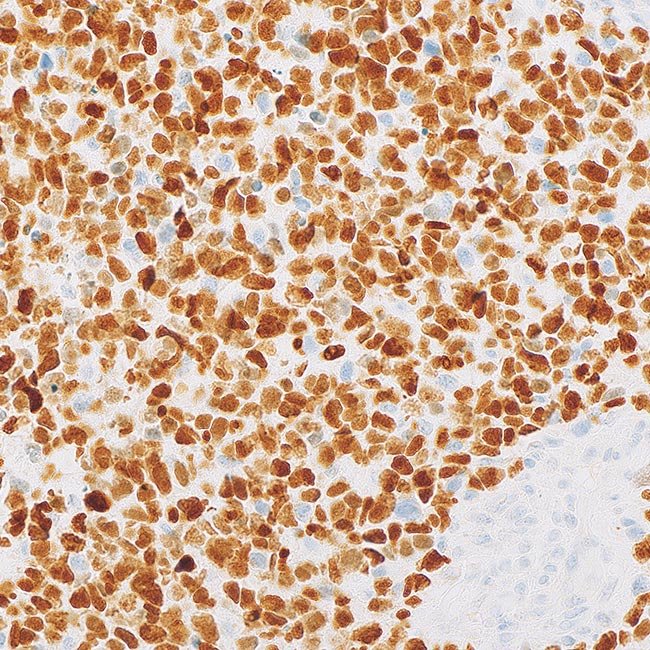
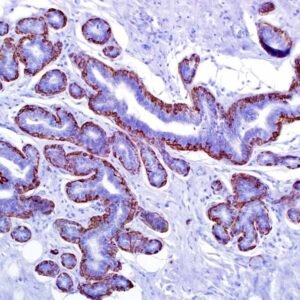
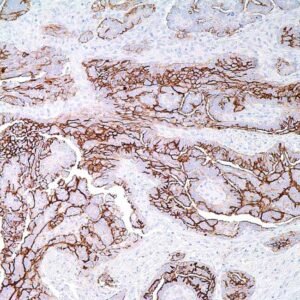
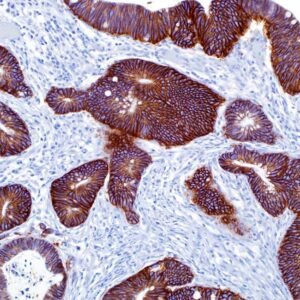
Along with additional markers such as those against calretinin, CK 5&6, CD15, HBME-1, MOC-31, and Ber-EP4, anti-CEA is primarily used as a tool to help differentiate between adenocarcinoma and epithelioid malignant mesotheliomas.1 Another suggested application for anti-CEA is to immunophenotype various metastatic adenocarcinomas in order to determine their origin within a panel of different markers.1 Adenocarcinomas from the lung, colon, stomach, esophagus, pancreas, gallbladder, urachus, salivary gland, ovary, and endocervix are all positive for anti-CEA. The canalicular pattern of hepatocellular carcinoma is effectively stained with polyclonal anti-CEA.