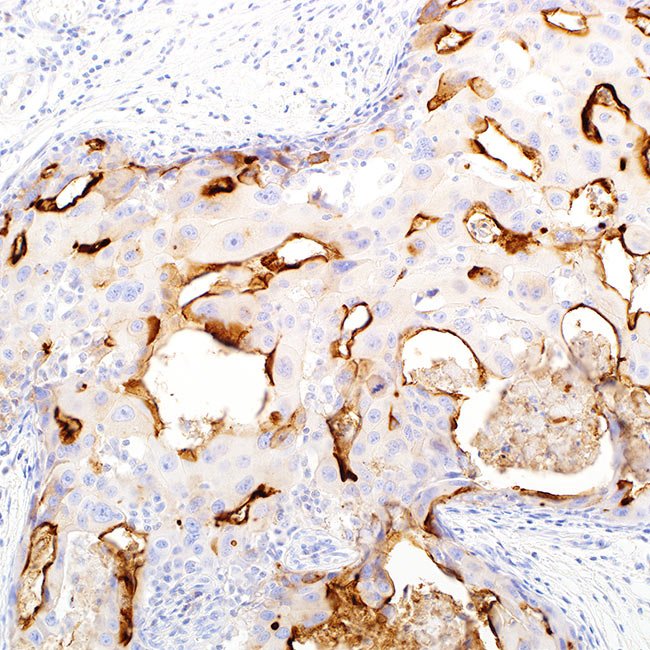
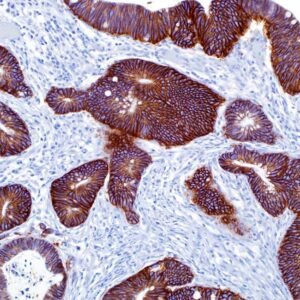
Mucin 1 (MUC1) is a glycoprotein that spans cell membranes and offers protection to epithelial cells against damage from external factors. Beyond this protective function, MUC1 plays a role in cellular adhesion, growth, movement, invasion, and longevity. Within epithelial cells, the expression of MUC1 is influenced by the connection of TNFα to TNFR1 and the stimulation of the NFκB pathway. In healthy skin, MUC1 is not present in normal epidermal tissue but can be found in both pre-cancerous and cancerous conditions. Moreover, MUC1 has been detected in the epidermis of psoriatic plaques derived from individuals diagnosed with psoriasis vulgaris. MUC1 is found not only on the top surface of certain suprabasal keratinocytes but also across the whole surface of some of these cells and some basal keratinocytes. On the other hand, MUC1 immunoreactivity is generally absent in the epidermis of healthy skin.
Reactive gastropathy ranks as the second most frequent diagnosis resulting from gastric biopsies. In previous reports, there has been noted increased proliferation of epithelial cells and changes in the epithelial cytokeratin profile, which differ from those observed in Helicobacter pylori gastritis. The loss of MUC1, either in patches or entirely, was identified in 67% of the examined cases.
An overabundance of MUC1 was observed in 78% of papillary thyroid carcinomas (PTC). A multivariate analysis indicated a significant correlation between MUC1 expression and the existence of the BRAF (V600E) mutation, as well as lymph node metastasis in PTC. Lymph node metastasis emerged as the primary risk factor for relapse. In a study on thymic epithelial tumors, MUC1 was strongly linked to VEGF, p53, and micro-vessel density (MVD). The expression of MUC1 was positive in 94% of thymic carcinomas, yet absent in type B3 thymomas, highlighting a considerable distinction. The level of MUC1 expression correlated closely with the malignancy grade in thymic epithelial tumors, and a positive MUC1 expression was significantly associated with unfavorable outcomes in this condition. MUC1 has the potential to serve as a valuable marker for distinguishing thymic carcinoma from type B3 thymoma.